Earth World learning pack
Deserts of the World
Cross hot sand, polar ice, and even Mars.
Six source-backed discoveries about five major Earth deserts and the cold desert of Mars.
- Discoveries
- 6
- Facts to explore
- 24
- Recommended ages
- 5–8
- Explore time
- 12 min
Discovery 01
Antarctic Desert
The biggest desert is covered in ice
💡 Antarctica is the largest desert on Earth!
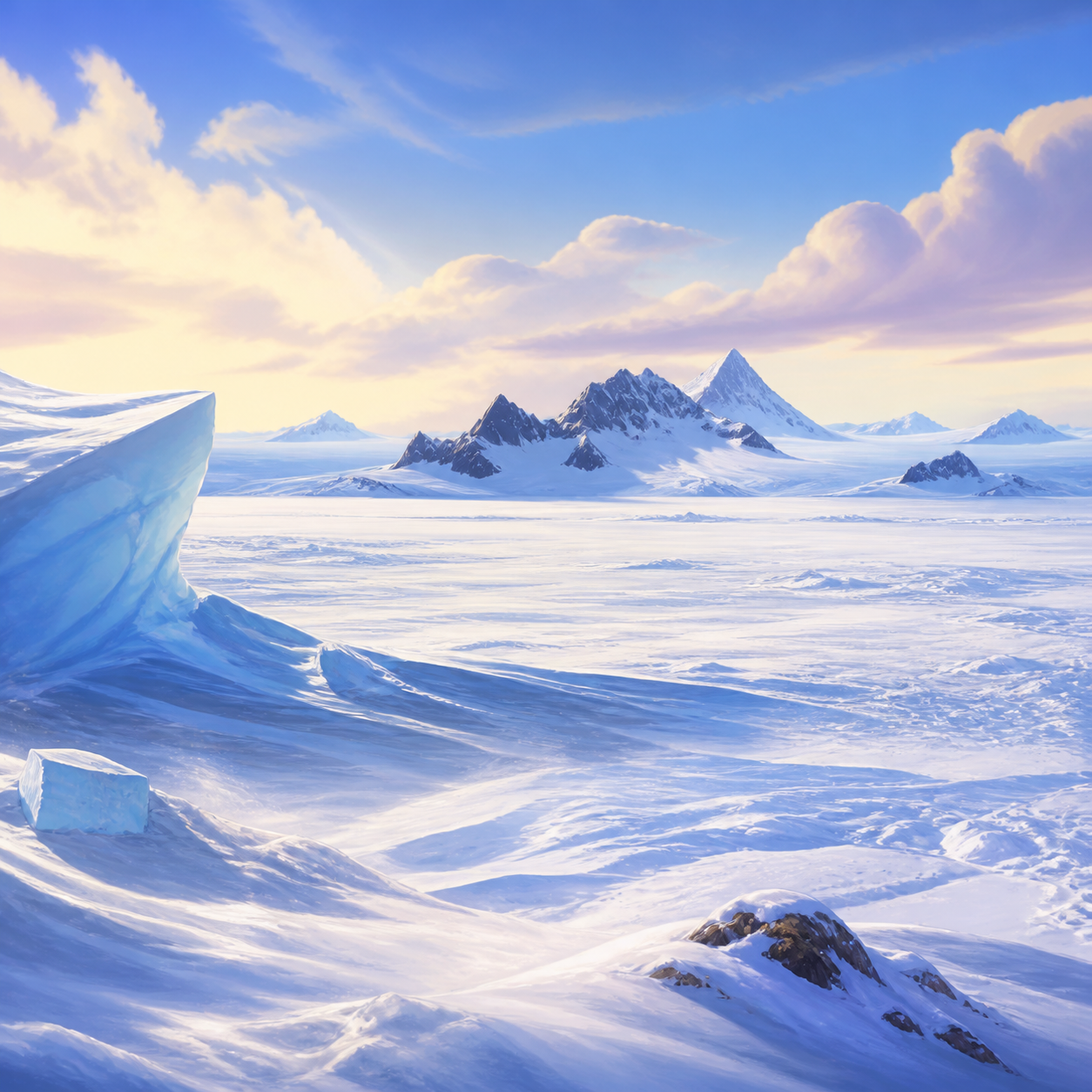
A desert is defined by how little precipitation it receives, not by how hot it is. Antarctica is enormous, cold, and very dry.
Did you know?
- Fact 2: Antarctica covers nearly 14 million square kilometres — about 1.4 times the size of the United States.
- Fact 3: Only about 0.4% of Antarctica is free of snow and ice.
- Fact 4: Its snowfall equals only about 150 millimetres of rain in an average year, so Antarctica qualifies as a desert.
Discovery 02
Sahara Desert
The giant hot desert of North Africa
💡 The Sahara is the largest hot desert on Earth!
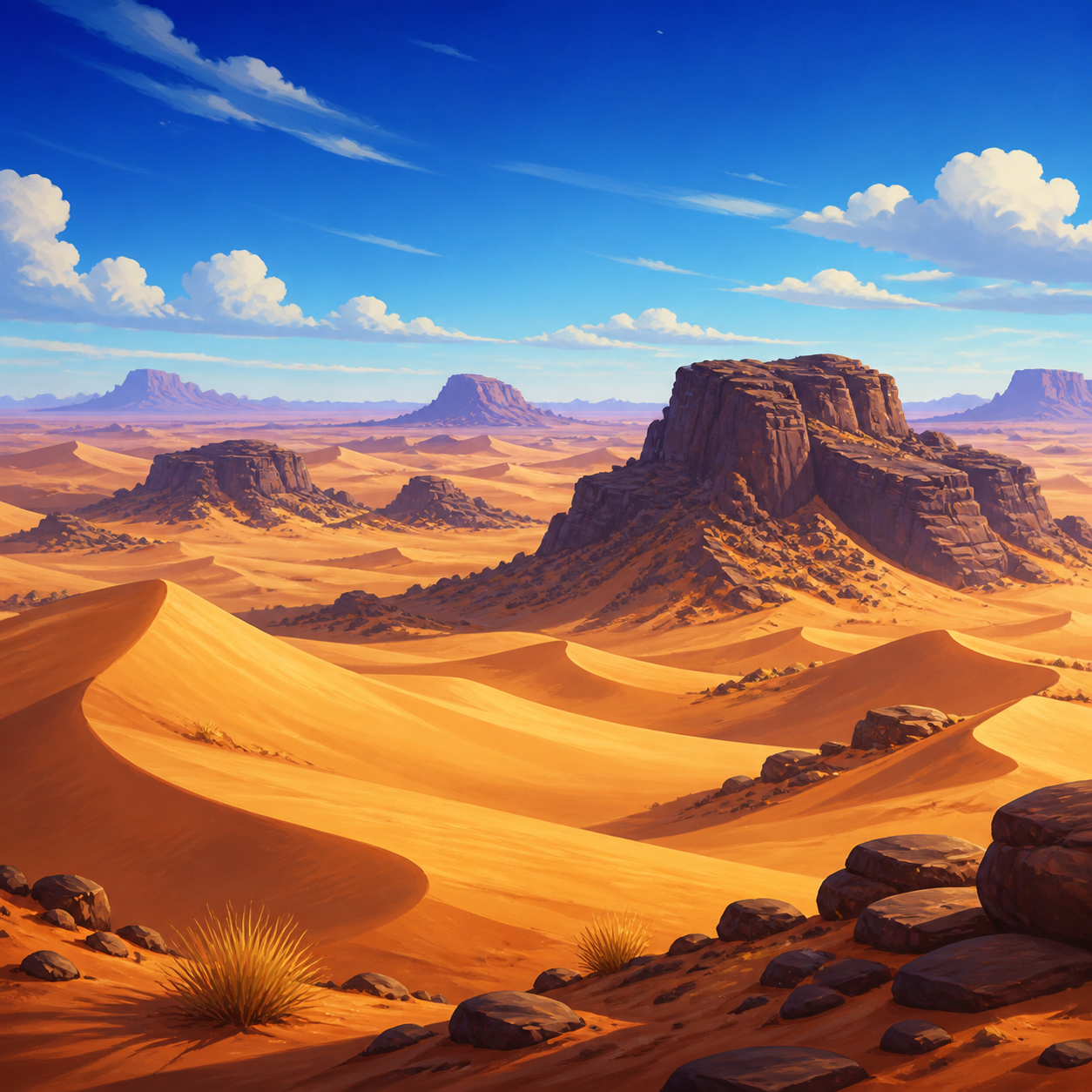
It stretches across much of North Africa and is smaller only than the cold polar deserts of Antarctica and the Arctic.
Did you know?
- Fact 2: The Sahara is a trade-wind desert, formed under belts of dry, sinking air.
- Fact 3: Some Saharan dunes form long parallel lines with gaps of several kilometres between them.
- Fact 4: Saharan dust can travel across the Atlantic Ocean and reach the Americas.
Discovery 03
Arabian Desert
Home of the enormous Empty Quarter
💡 The Arabian Desert contains the world's largest continuous sand sea!
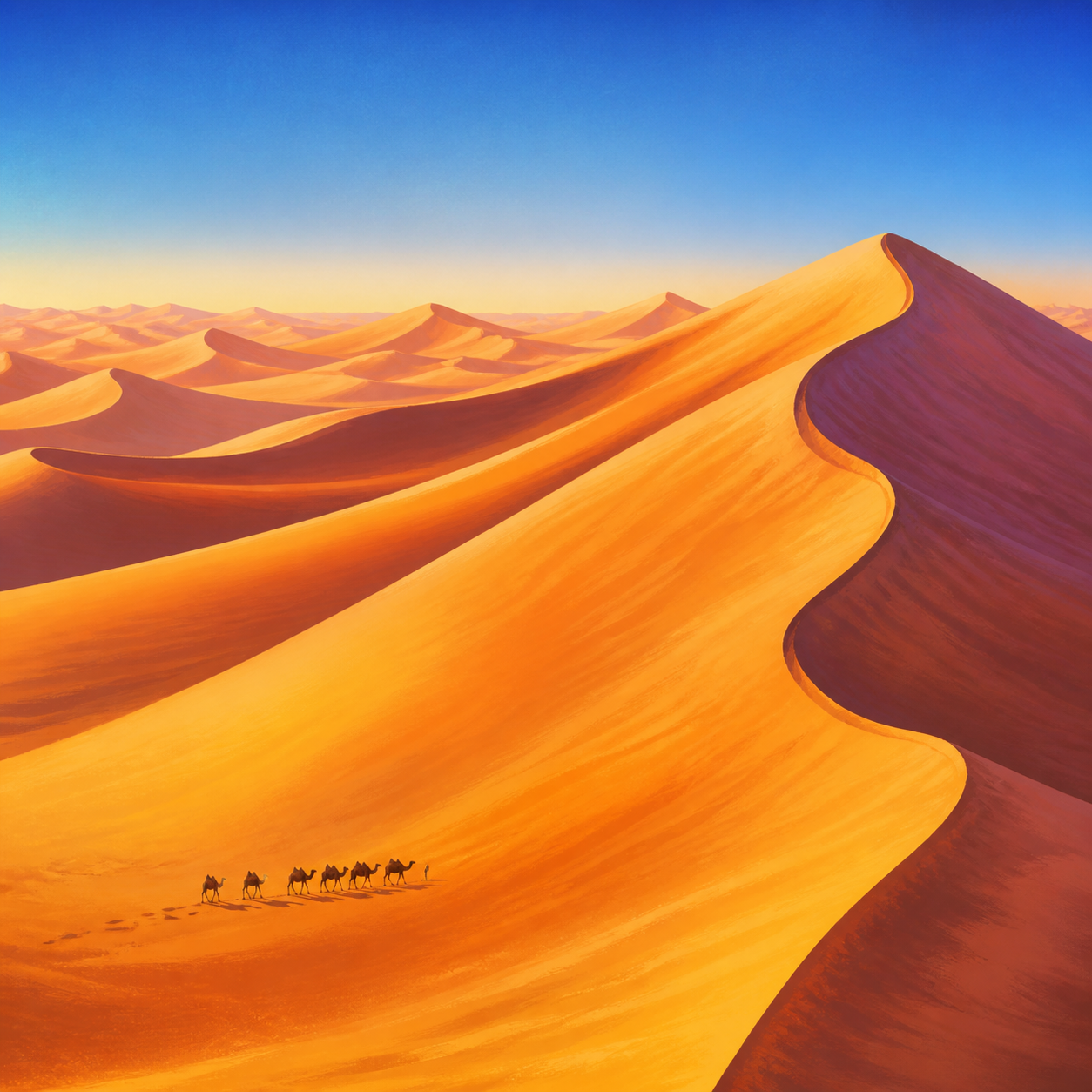
The Rub' al Khali, or Empty Quarter, is a vast field of dunes in the southern Arabian Peninsula.
Did you know?
- Fact 2: The Empty Quarter spreads across parts of Saudi Arabia, Yemen, Oman, and the United Arab Emirates.
- Fact 3: It is roughly the size of France and holds about half as much sand as the whole Sahara.
- Fact 4: Some dunes rise more than 330 metres — taller than the Eiffel Tower.
Discovery 04
Gobi Desert
A cold desert of rock, gravel, and sand
💡 The Gobi can be freezing cold in winter and scorching hot in summer!
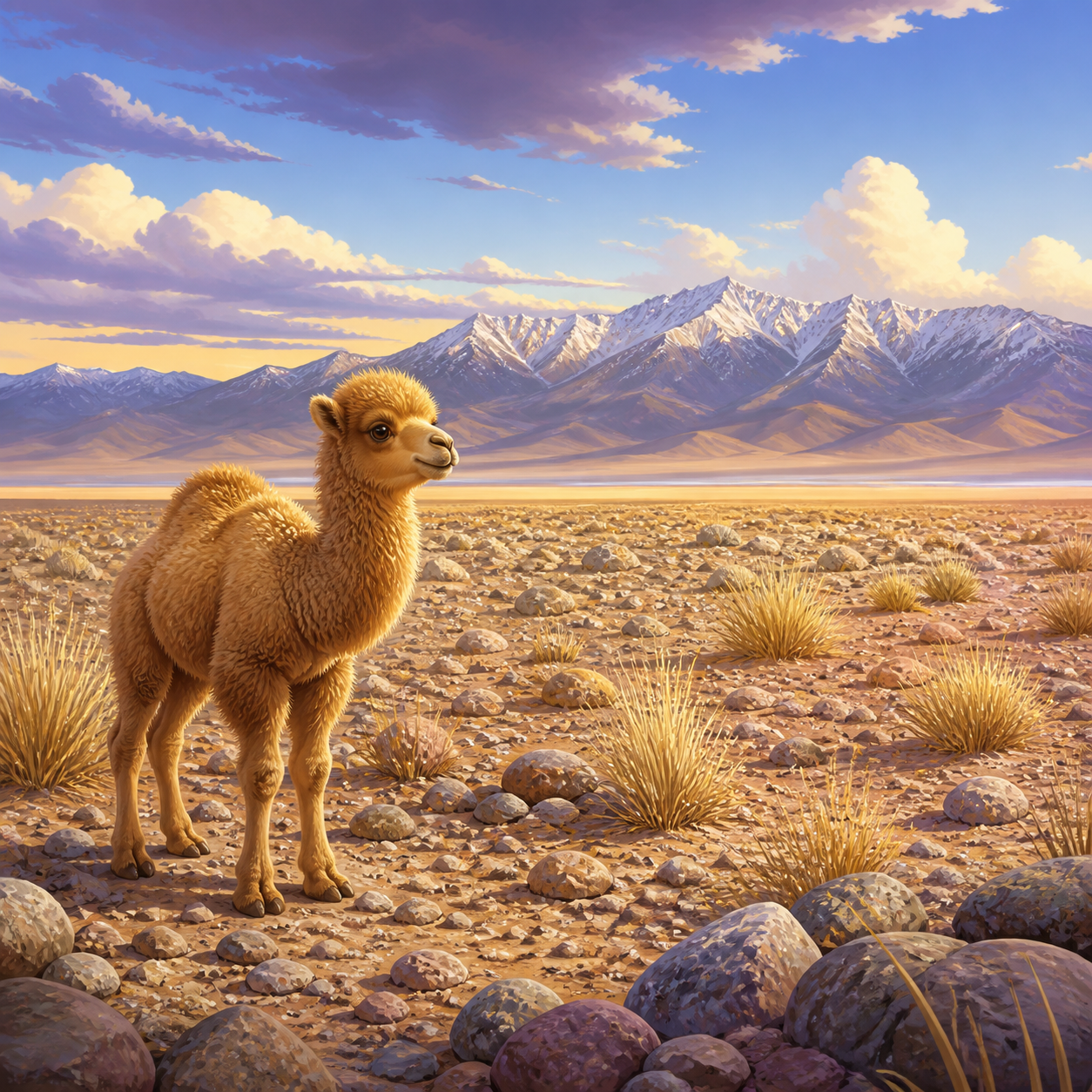
This Asian desert has recorded winter lows near −40°C and summer highs of 40°C or more.
Did you know?
- Fact 2: The Gobi stretches across parts of Mongolia and China.
- Fact 3: Much of its surface is rocky outcrop and gravel plain rather than sand dune.
- Fact 4: Its name has been translated from Mongolian as “waterless place” or “very large and dry.”
Discovery 05
Atacama Desert
The driest non-polar desert
💡 Some parts of the Atacama receive only a few millimetres of rain each year!
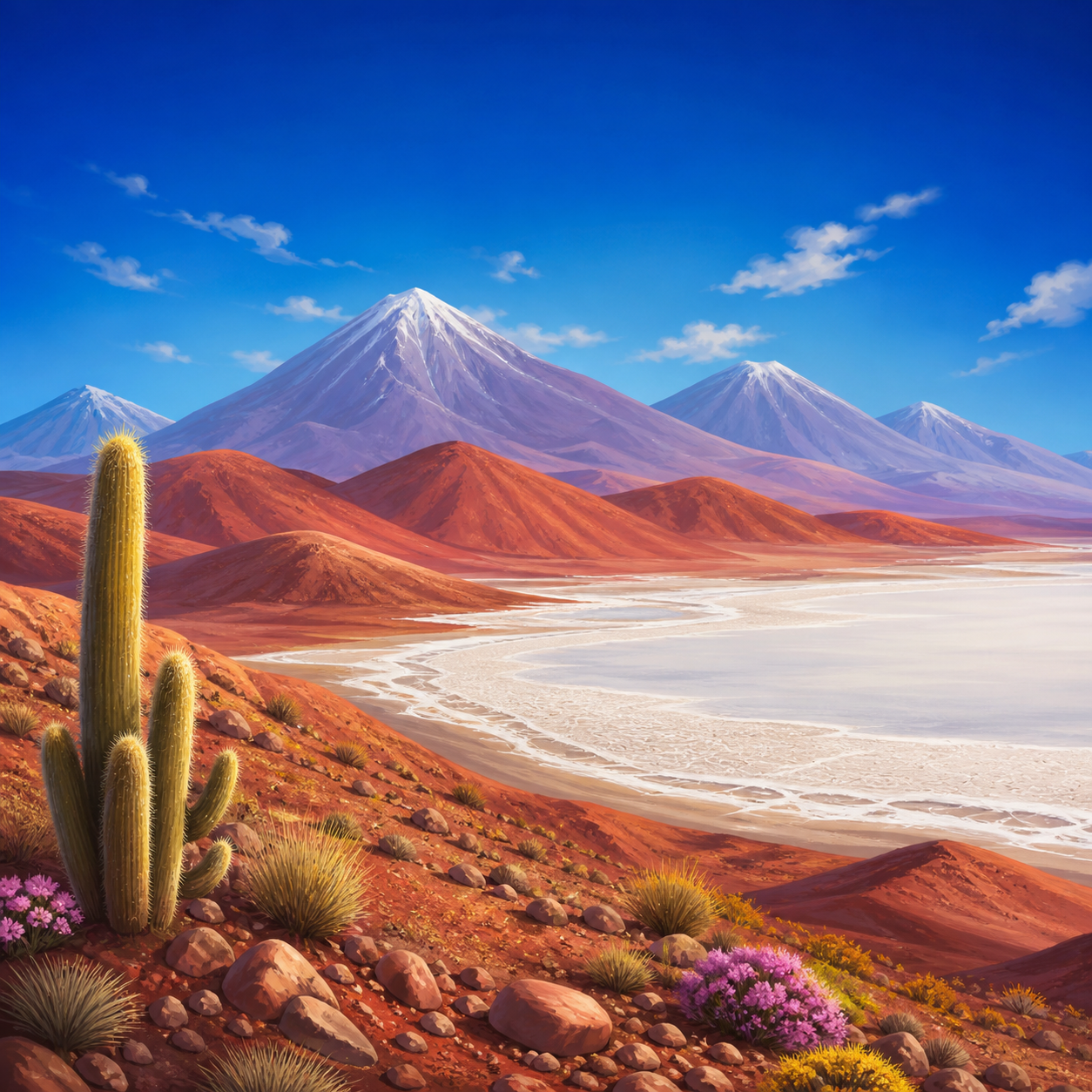
Some places there have even gone without recorded rain for long periods, making northern Chile extremely dry.
Did you know?
- Fact 2: The Atacama runs along the western side of the Andes Mountains in northern Chile.
- Fact 3: The Andes create a rain shadow that blocks much of the moisture from reaching the desert.
- Fact 4: A cool Pacific Ocean current and persistent high pressure also help keep the Atacama dry.
Discovery 06
The Desert of Mars
A cold, dusty desert on another planet
💡 Mars is a cold desert world!
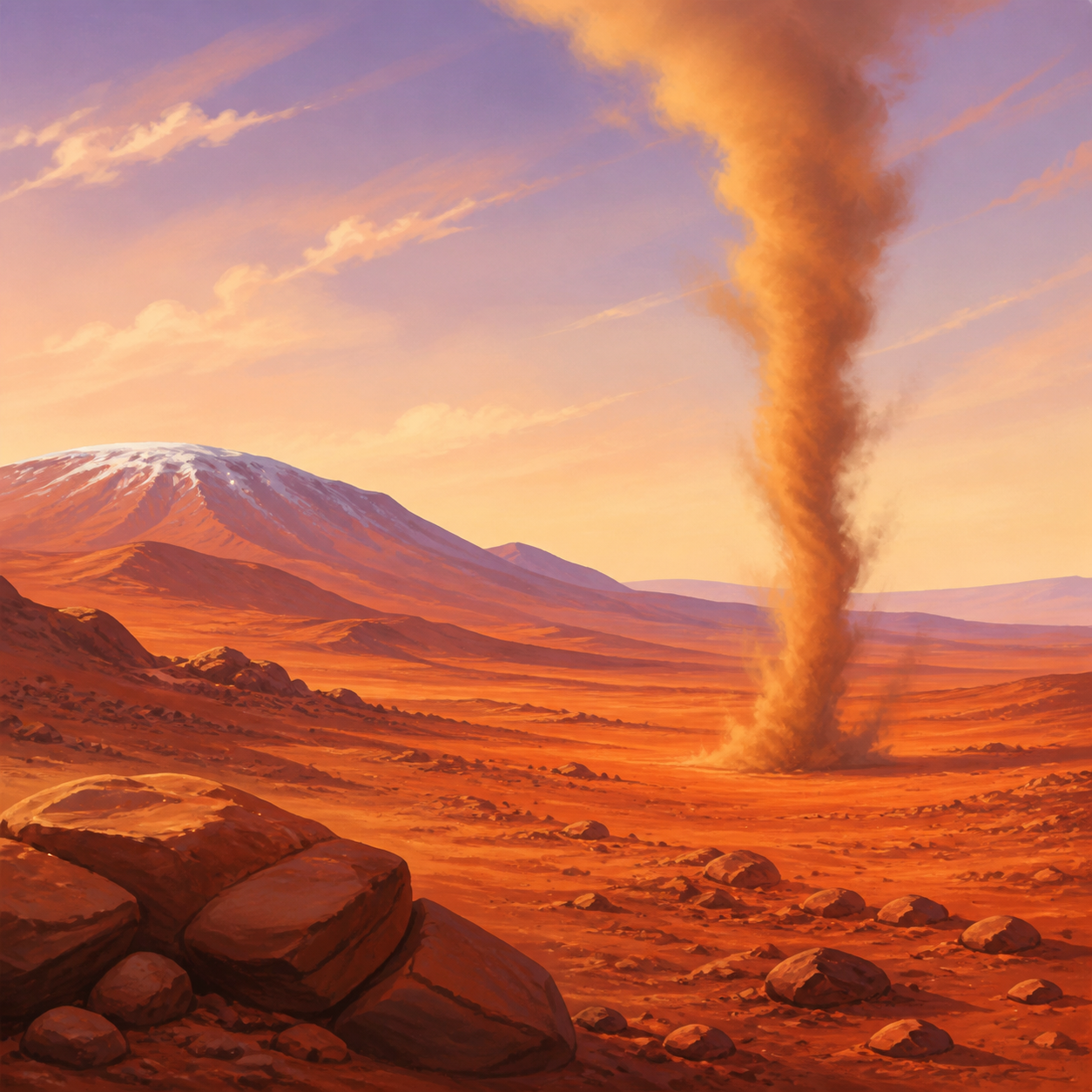
Its average temperature is about −65°C, its air is very thin, and liquid water cannot last long on most of the surface today.
Did you know?
- Fact 2: Iron minerals in Martian rocks and dust have rusted, giving Mars its reddish colour.
- Fact 3: Dust storms on Mars can sometimes spread across much of the planet.
- Fact 4: Mars has water ice today, especially at its poles and just below the ground in some regions.