Earth World learning pack
Types of Trains
See five different ways trains move.
Five source-backed discoveries about steam, diesel-electric, electric, high-speed, and maglev trains.
- Discoveries
- 5
- Facts to explore
- 25
- Recommended ages
- 5–8
- Explore time
- 10 min
Discovery 01
Steam Train
The locomotive powered by boiling water
💡 A steam locomotive uses hot steam to push pistons that turn its wheels!
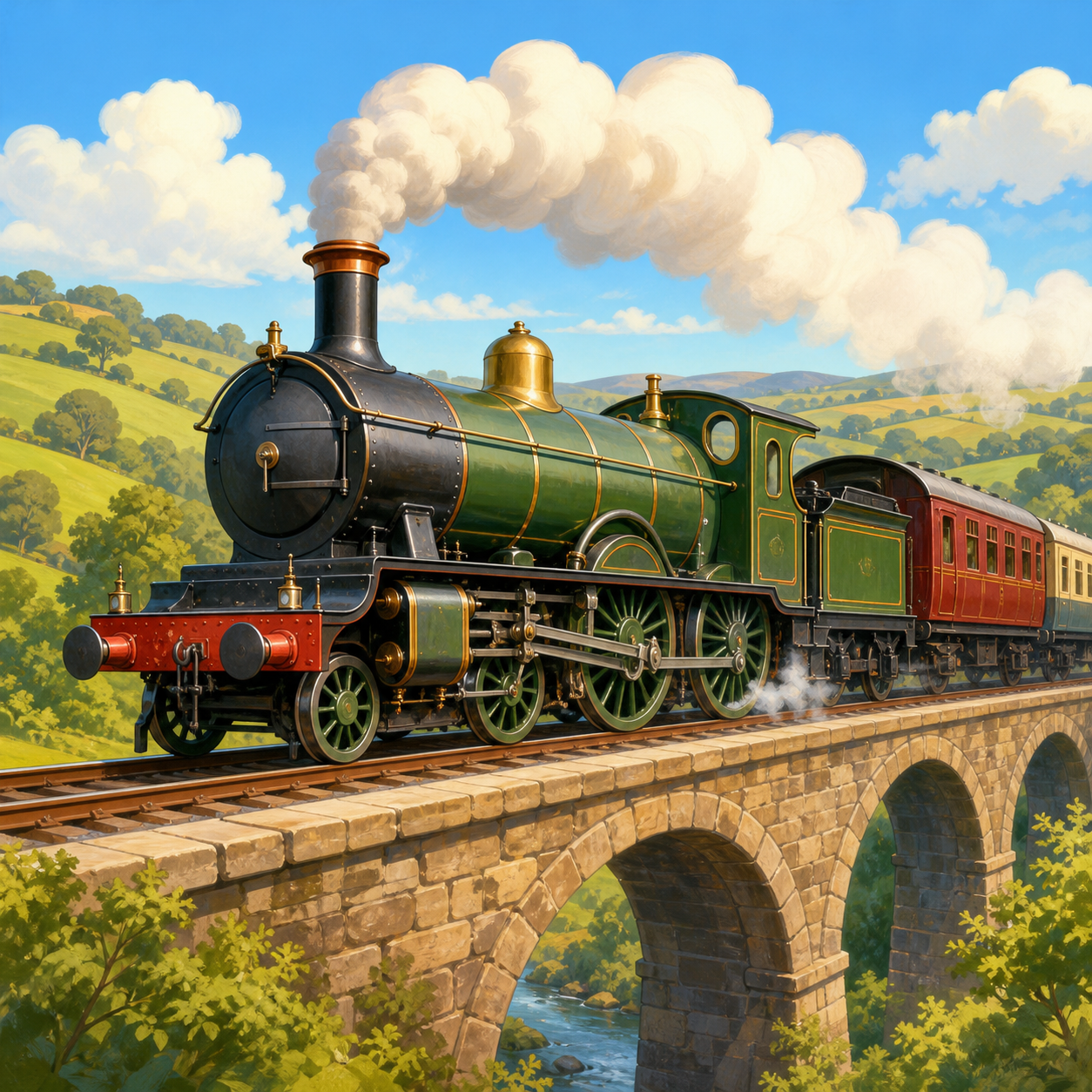
Fuel heats water in a boiler; the expanding steam moves pistons connected to the driving wheels.
Did you know?
- Fact 2: Richard Trevithick built the first successful steam locomotive to haul a load on rails in 1804.
- Fact 3: Stephenson’s Rocket combined an efficient multi-tube boiler with a blast-pipe exhaust.
- Fact 4: Rocket won the Rainhill Trials in 1829 and helped show that steam locomotives could be practical.
- Fact 5: Flying Scotsman became the first steam locomotive officially recorded at 100 miles per hour.
Discovery 02
Diesel-Electric Train
A power station on rails
💡 Most diesel locomotives use their diesel engine to make electricity!
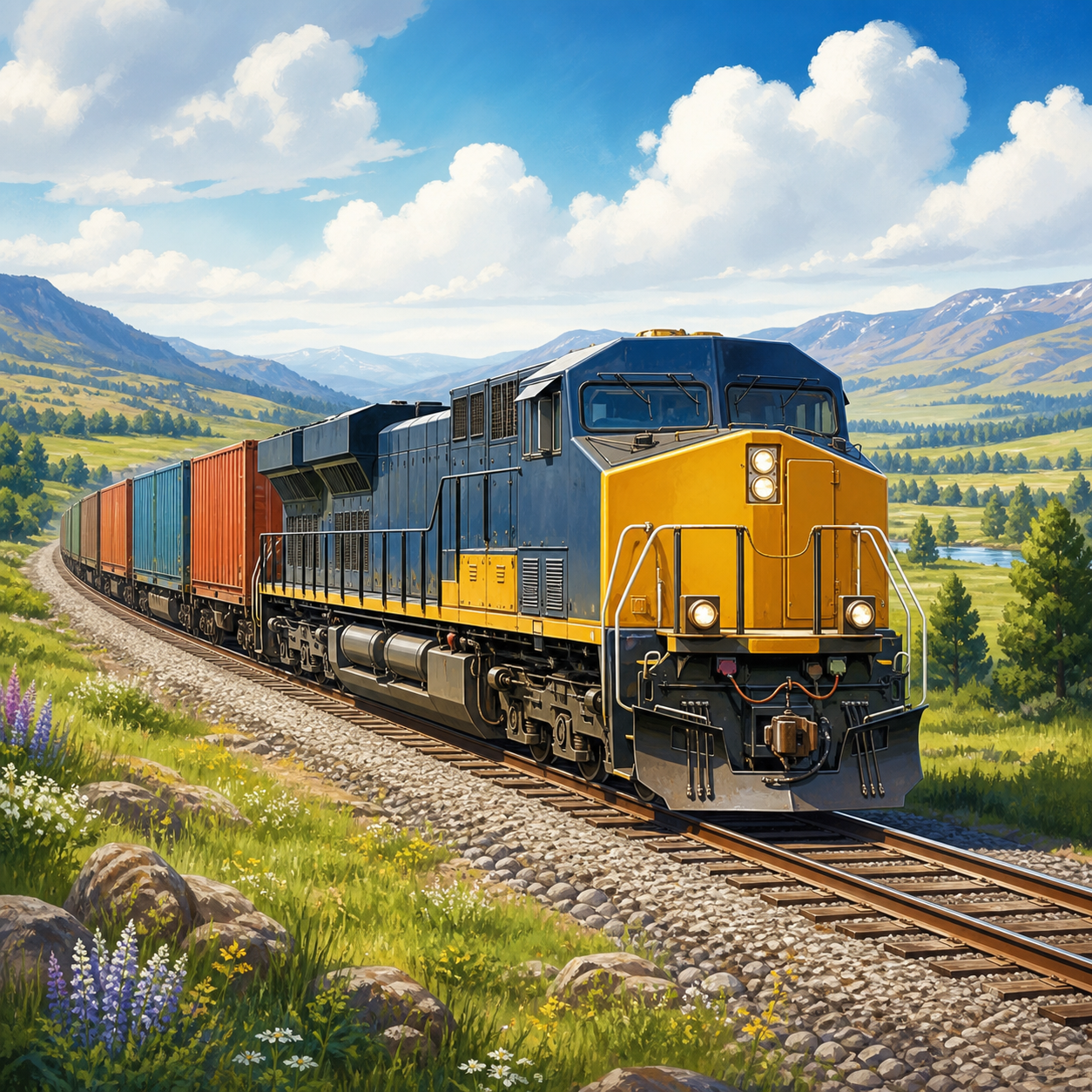
The diesel engine turns an alternator or generator, and that electricity powers traction motors connected to the wheels.
Did you know?
- Fact 2: Diesel fuel ignites when it is sprayed into very hot compressed air inside the engine.
- Fact 3: The traction motors can also act as generators during dynamic braking.
- Fact 4: Diesel-electric locomotives can run where tracks have no overhead electric wires.
- Fact 5: Modern emissions rules limit pollutants from newly built and remanufactured diesel locomotives.
Discovery 03
Electric Train
Powered from outside the train
💡 Electric trains can collect power from overhead wires!
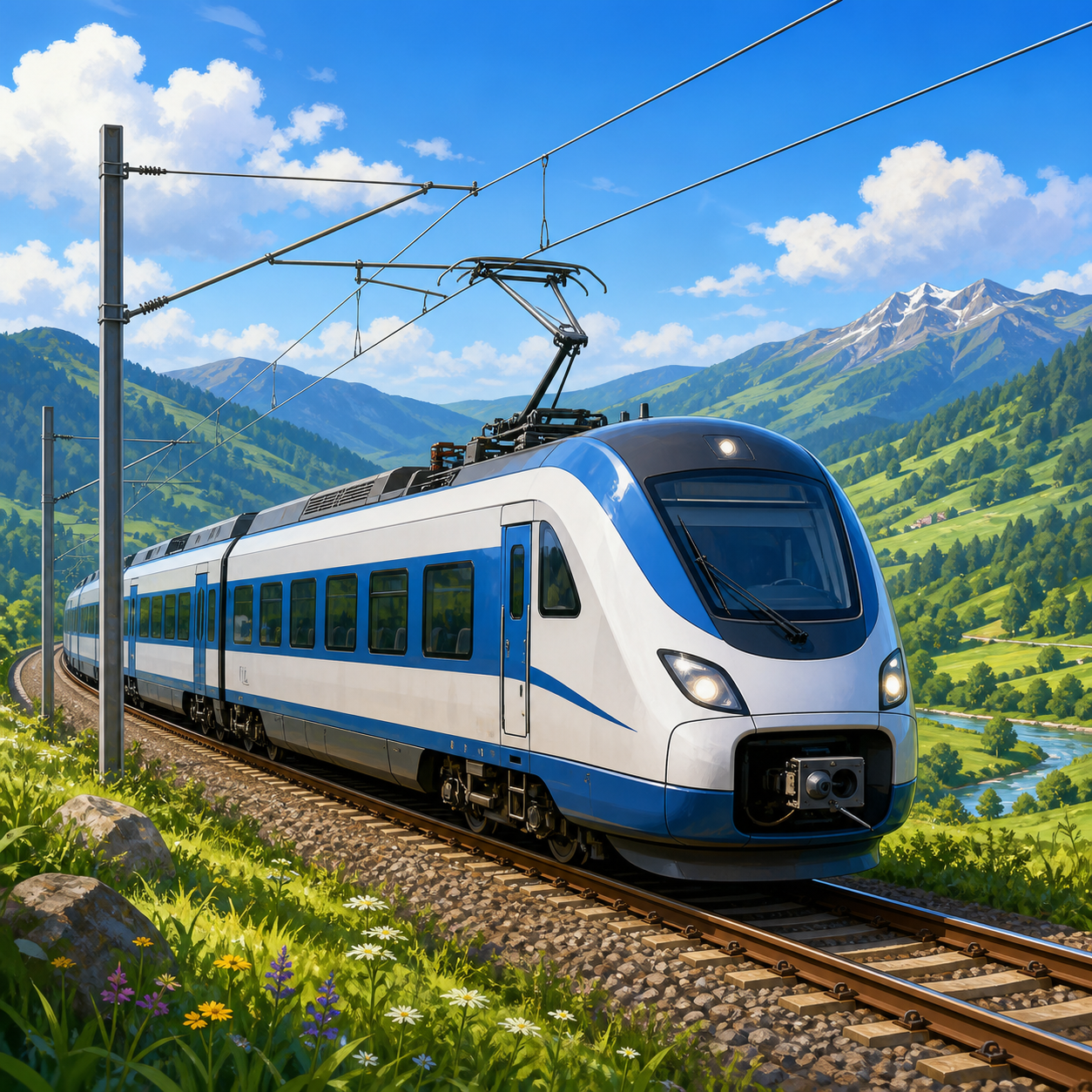
A roof-mounted arm called a pantograph touches the overhead contact wire and carries electricity into the train.
Did you know?
- Fact 2: Some electric railways collect power from an extra rail beside the running rails instead.
- Fact 3: Electric traction motors turn electrical energy into motion at the wheels.
- Fact 4: Electric trains produce no exhaust at the train itself.
- Fact 5: Some electric trains use regenerative braking to send useful electrical energy back into the system.
Discovery 04
High-Speed Train
Fast rail between cities
💡 High-speed rail is a whole system, not just a fast train!
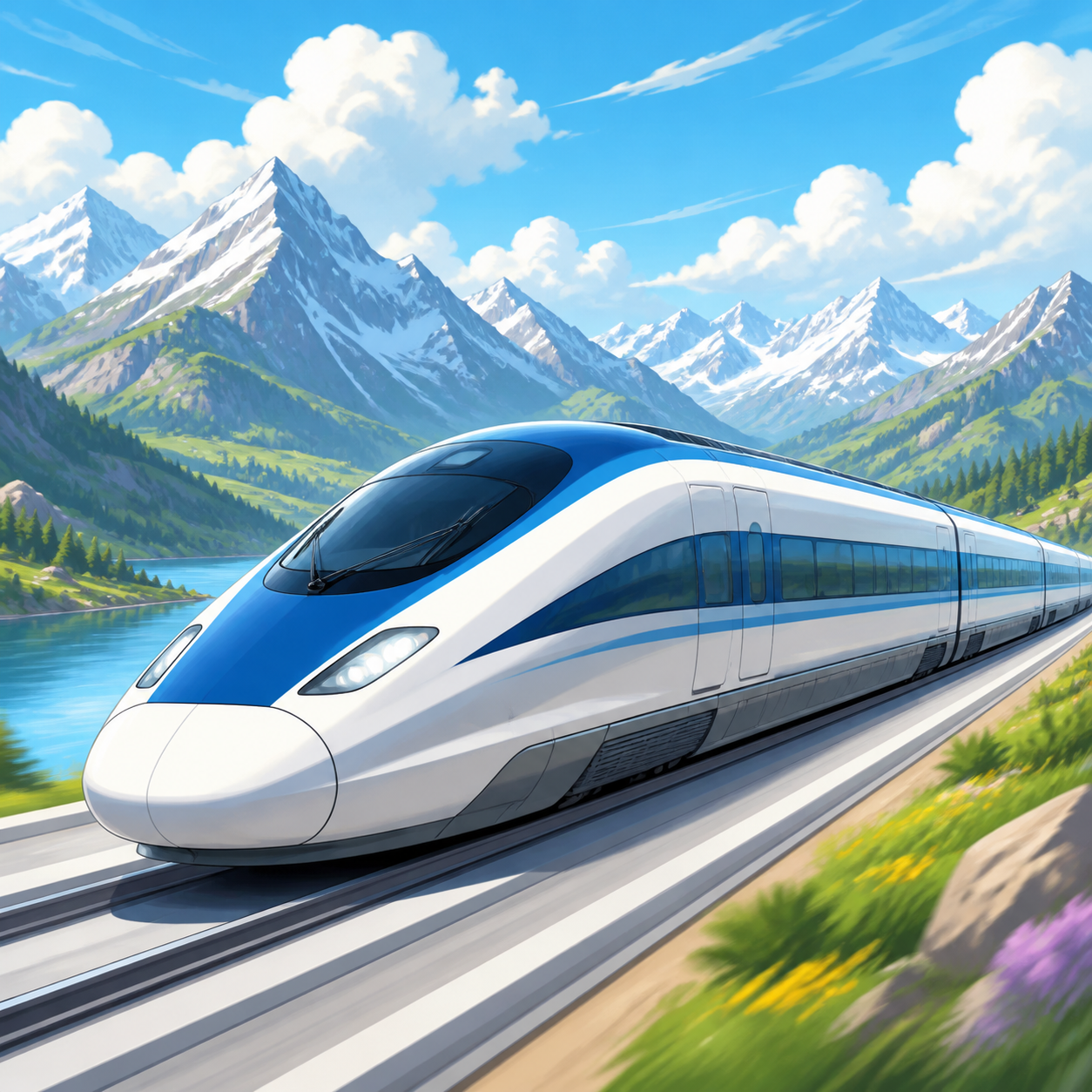
Special trains work together with suitable track, signalling, power, and carefully controlled operations.
Did you know?
- Fact 2: The International Union of Railways uses 250 km/h as the main speed criterion for high-speed rail.
- Fact 3: Japan’s Tokaido Shinkansen opened in 1964 between Tokyo, Nagoya, and Osaka.
- Fact 4: Tokaido Shinkansen trains operate at up to 285 km/h.
- Fact 5: Their long, smooth noses help reduce air resistance and pressure changes at high speed.
Discovery 05
Maglev Train
A train lifted by magnets
💡 A maglev train can float above its guideway using magnetic forces!
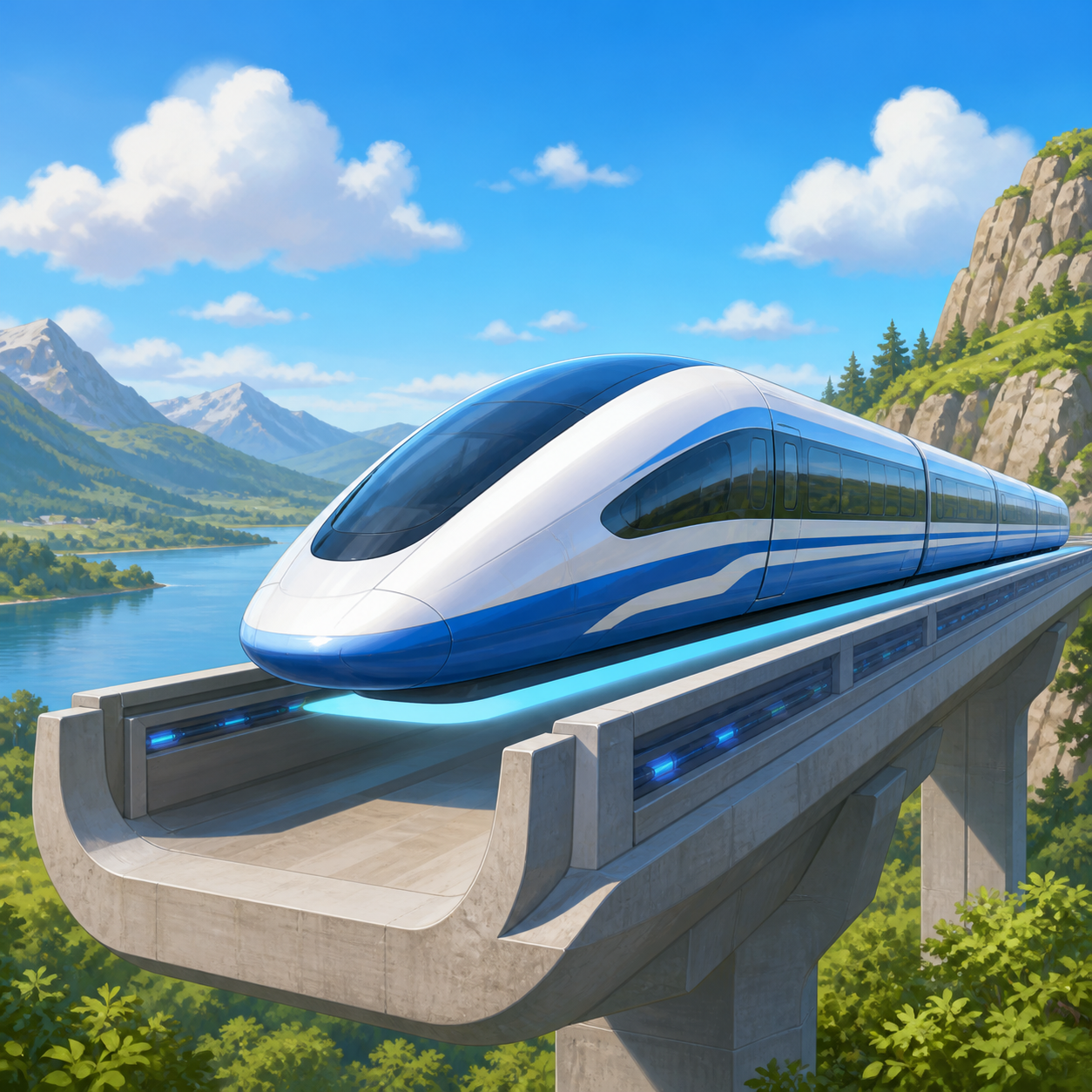
Maglev means magnetic levitation. Magnets lift, guide, and propel the vehicle without normal steel wheels touching rails at speed.
Did you know?
- Fact 2: A linear motor uses changing magnetic attraction and repulsion to pull and push the train forward.
- Fact 3: JR Central’s superconducting maglev levitates about 10 centimetres above its guideway.
- Fact 4: That train uses rubber wheels at low speed and begins levitating above about 150 km/h.
- Fact 5: In 2015 it set a train speed record of 603 km/h on a test run.